How to Find (or Become) an LGBTQ+ Affirming Wedding Vendor
BLOG

The LGBTQ community has made a lot of progress in positive visibility and protections in the past few decades (sometimes depending on the area of the country/world you are from), but we are all well aware that not everybody is supportive, let alone affirming. There are also currently bills making their way through state legislatures which is scary. This of course can vary by state and region, and if somebody does not explicitly state they are affirming, it can leave some people wondering how safe they will be. Especially when dealing with important life decisions (in this case, it is very often weddings), people need to be able to place trust in the people they surround themselves with; for happiness, quality of work, and safety. So how do you find an affirming vendor? If you are a vendor, how can you be sure a client will not question where you stand? Below are some ideas, conversations, and reading that I have put together in a blog to share with you.
Speaking from personal experience from my own wedding planning in 2018/2019, I noticed many companies had paperwork (or online forms) that had bride/groom, husband/wife, she/he EVERYWHERE. I think maybe one vendor used partners instead of gendered language. Now, at this point in my life, I had started to realize I may be non-binary, but was not sure at the time, and still used she/her pronouns as a default. During the process, I was finding myself annoyed that often there was not even an option for two brides or two grooms on all the paperwork. I personally am an advocate within the LGBTQ community and have educated others and spoken publicly on topics, so I felt comfortable making it known to my vendors how we should be referred to. But this can be very stressful for some to navigate, people in the community should not have to constantly advocate for themselves and educate others, or walk on eggshells especially when planning something so important. I distinctly remember specific details as to how I made our wedding as gender neutral as we could, without calling attention to it, as family was not quite aware yet.
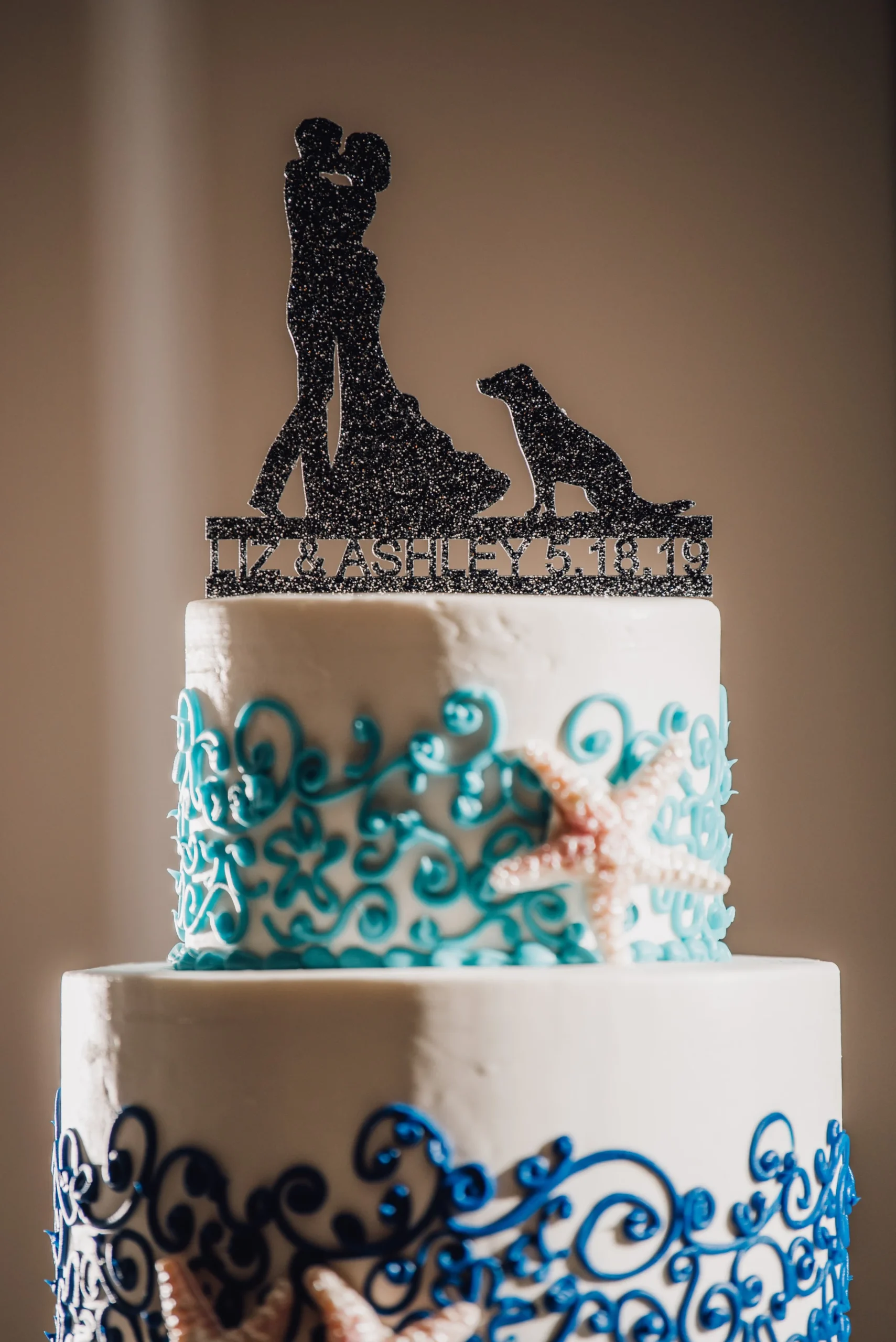
Example of cake topper without Mr. and Mrs. (Photo credit: Iryna Shostak for Inspire Me Imagery )
-
Our cake topper ended up being what looked like a bride and groom silhouette (I wore a suit) with a dog…but instead of Mr. or Mrs., it simply had our first and last names and our wedding date
-
When the DJ was talking to us about our first dance, and introductions etc, I made sure to make it clear how I identified, and I did not want to be called Mrs., instead we opted for being introduced as The (maybe we included “newlyweds”) Earle-Lotts
-
As for wedding vows, I ended up compiling a ceremony from a bunch of different resources and eliminating as many pronouns as possible – opting for “them” or “the couple”.
-
Vendors mostly referred to us by our first names (instead of Mrs/Mrs)
Fast forward to now: I have unlearned a lot, I have learned a lot, and I have given a few more presentations on inclusion and educating others about the LGBTQ community. I have also connected with quite a few other advocates, in various types of careers. There are many resources out there, and I am not the first, nor am I the last to write a blog post about this topic, but I wanted to include some of my own story, and hopefully put more resources out there for people.
As I have been speaking with others on this very topic: I have been communicating that to most people, this will go largely unnoticed, but to those in the community and strong allies, it will say SO MUCH. So let’s break some things down.
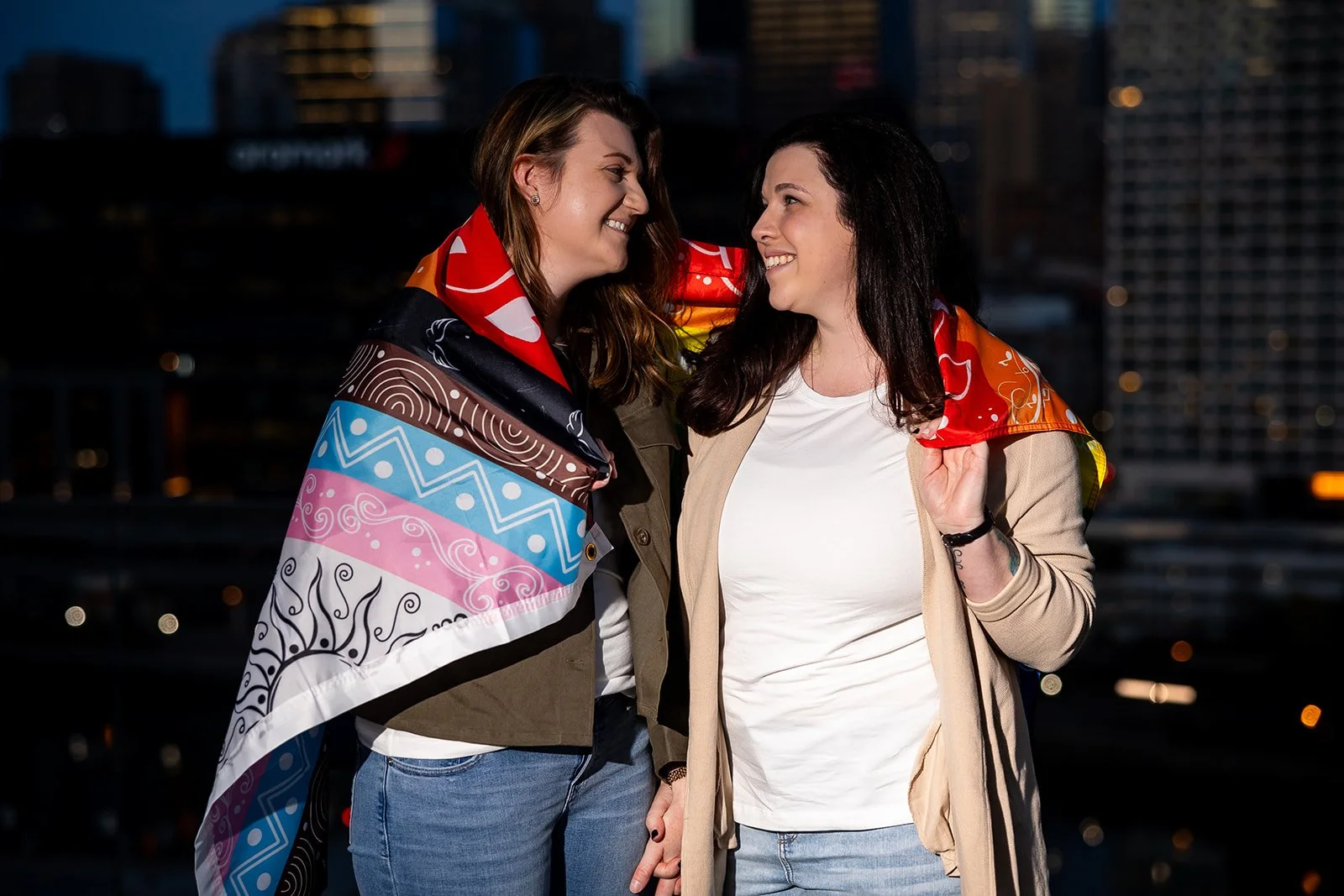
How do I find an affirming vendor?
-
Google LGBTQ (vendor type) near me. For example LGBTQ wedding photographer in South Jersey
-
ASK YOUR FRIENDS! Chances are if you are part of the LGBTQ community, you know others in the community, and maybe they have had to go through this already. Ask them who they used but also if they would recommend them to others! Maybe they happen to follow someone on social media and can give you some names to look into.
-
Search instagram hashtags like #queerphotographer #lgbtqphotographer #queerweddingphotographer
-
Anyone can say they will work with LGBTQ couples, but to see if they are affirming – check their portfolios and social media.
-
Is there a variety of clients portrayed?
-
How do they describe clients?
-
Do they share their pronouns/ask for pronouns?
-
Do they only share LGBTQ+ couples around certain times of the year?
-
Are their communications inclusive (non-gendered, allow for clients to self identify)
-
Do they make it CLEAR that they support the community (like sharing action items and uplifting LGBTQ+ voices)
-
-
While communicating with them, or reading about them, you may be able to tell if they are just checking the boxes, or if they genuinely are trying to create an affirming space for their clients, and actively educating themselves on best practices.
I’m going to put this little aside in here – some people may be wondering if there are any alternates to the terms Mr. and Mrs. While of course you can use whatever you feel best fits you, or drop the honorific totally – I happened to come across Mx a few years ago. This is pronounced like mix, and does not denote gender or marriage status. I happen to use this honorific myself (and it is quite awesome that when I added my wife’s last name to mine I became Mix Lott…mix a lot…HA! Get it?)
How do I know what to say when I communicate with someone?
-
In all my forms (contact, questionnaire etc) I have a dedicated space for PARTNER names and the OPTION for PRONOUNS. This shows a person that you want to be able to address them correctly from the beginning, avoiding making it awkward if you assume the wrong pronoun, and they have to correct you (or they may feel disconnected and not want to correct you).
-
When leaving the option for pronouns or asking for someone’s pronouns, please do not ask for preferred pronouns (or names). This infers that these are merely choices, and not as valid. Also note that mandating that everyone share their pronouns may be uncomfortable as well because some people may not be sure of their pronouns, may not feel comfortable in that space, or they feel it may “out” them, so giving people choices is key.
-
-
Remember that pronouns do not equal gender.
-
De-gender your language and think outside the binary (at least initially). If someone self identifies (ie: they refer to themselves as a bride) then of course, call them a bride! (You can ask how someone wants to be referred to in your questionnaires as well!)
-
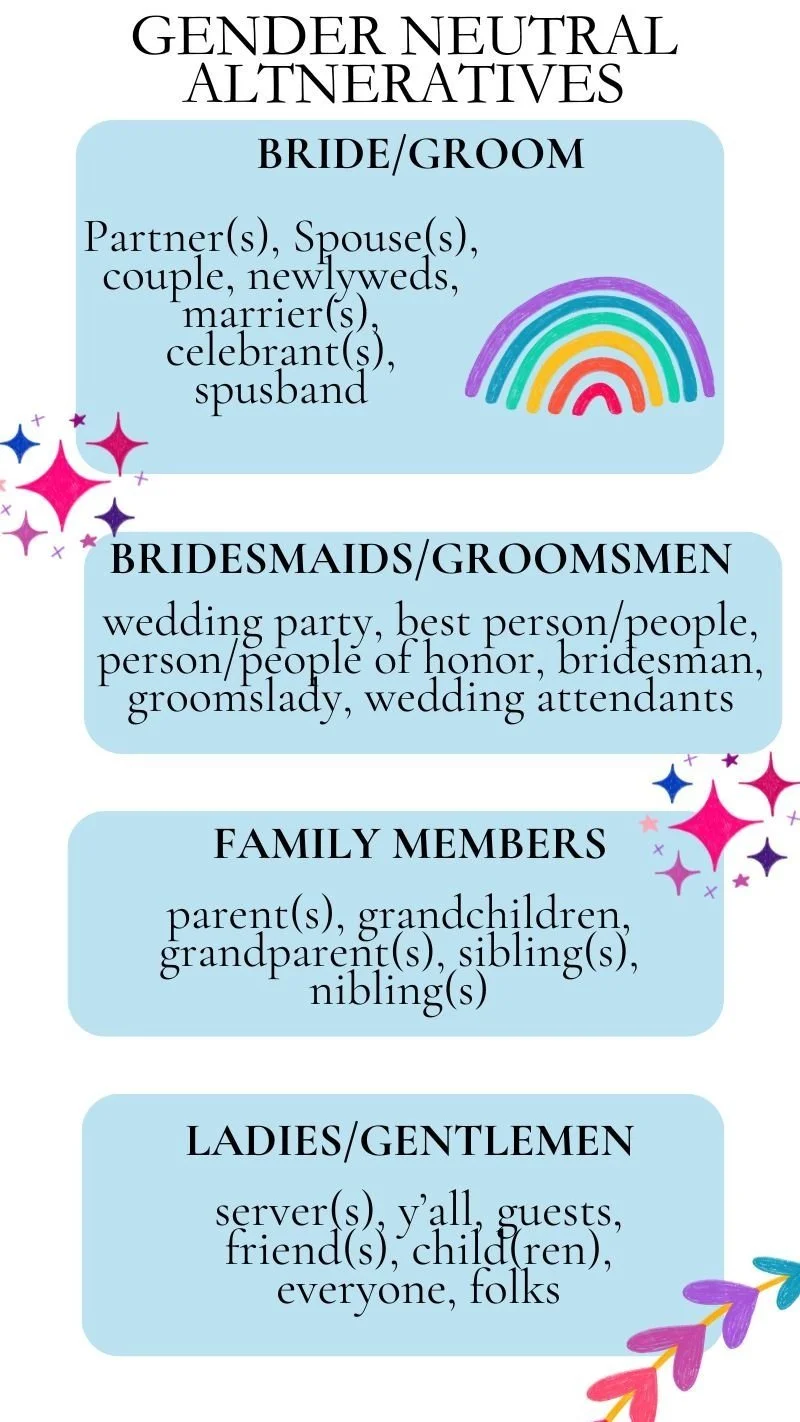
Instead of ladies and gentlemen/you guys – try everyone, y’all, guests, friends, attendees, etc.
-
Remember all of the paperwork we have had to sign throughout our lives, and all the papers we have written saying he/she, him/her etc etc? You can of course easily replace all of that by using them.
-
Meeting a guest? Asking about someone and you don’t know their pronouns? You can certainly ask them (or who you may be talking to about them)
-
Bride/groom? – partners, celebrant, etc. Bridesmaids/groomsmen? – wedding party. Husband/wife? Spouses, partners, etc. There are many different words you can use but a great “cheat sheet” to reference is on Shannon Collin’s Blog – LGBTQIA+ Affirming Language for Wedding Vendor’s
-
What are some ways I (as a vendor) can be more inclusive?
-
Introduce yourself with your name and pronouns (and sign your e-mails that way too.)
-
(it is so important that cisgender people can also share their pronouns so it is not only trans people disclosing theirs).
-
-
Ask how people want to be referred to, and what pronouns they use.
-
“Same sex” does not fit for every wedding in the LGBTQ+ community!
-
“same-sex” is outdated and there are people that do not identify within the gender binary. Using “same-sex” also erases those who are trans, non-binary, bisexual, and intersex. This also erases those who are in a hetero-passing relationship)
-
-
Check your websites, paperwork, etc to eliminate as many gendered words as you can (there are many alternate words you can use) and allow your clients to self identify.
-
Ask someone how they feel comfortable being posed! (Not everyone wearing a dress may want to pose extra feminine, and appear soft, someone wearing a suit may want extra time on portraits or getting ready details).
-
Don’t ask who is the man/woman, masculine/feminine person in the relationship
-
-
Ask if there is anything special they want you to know about their wedding they want documented or included in their wedding (you can see examples of this in Ryland and Jenelle’s blog post which had an amazing amount of details – even how J’s mom dressed).
-
Don’t have a masculine-presenting folks in dresses as “jokes” (here is an instagram reel about this)
-
Custom clothiers – small details that others may overlook may mean a lot to your client. For example – wanting a masculine cut/fitting suit to fit a female shaped body – placing buttons, zippers, and boutonnière hole on the left side instead of the right side.
**Just a side note – I did recently have a friend/mentor ask for help on editing some things on her own website so make it more inclusive (because as she put it – she never thought of these subtle changes before, but it makes sense, and if she felt excluded she would be pissed!) BUT I DIGRESS, I am open to working with others for help making their websites/questionnaires/forms etc more inclusive! Just contact me about working together!
I think some people may be fearful that this is in some way invalidating those who do identify within the binary, but I disagree. This is a way to honor EVERYONE and offer people the chance to self identify from the beginning in a more inclusive environment – and affirm them as their authentic selves.
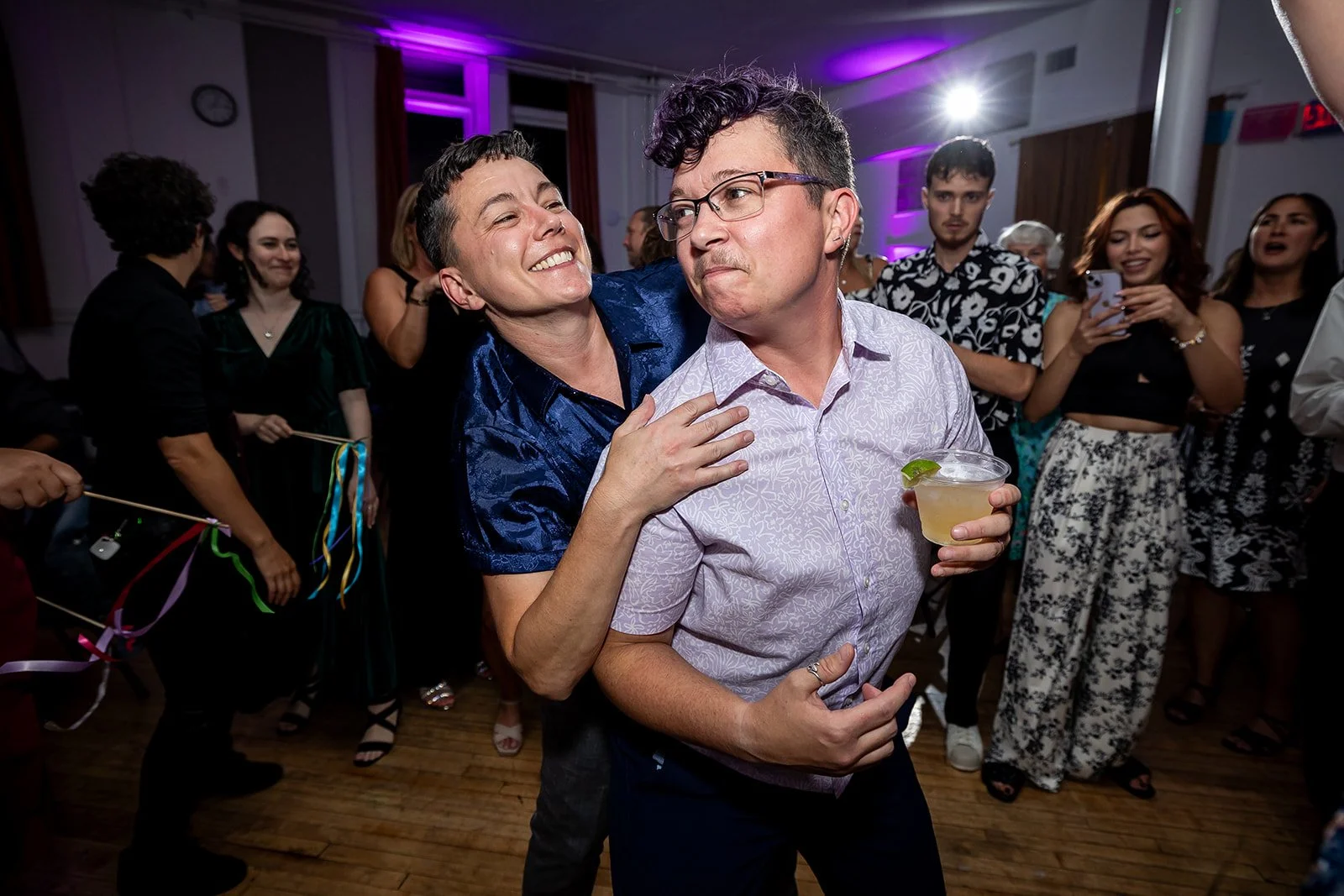
Just a few things to remember because this can be a lot of information! Totally understandable!
Change is not easy – it takes time and practice – so be kind to yourself. (and others)
If someone corrects you, it means they care enough to call attention to it – say thank you and work on it for next time.
If you make a mistake, you do not have to call attention to it, or apologize profusely. You can simply apologize, correct it, and move on – I promise you, the latter is much appreciated!
Thank you for taking the time to read this and educating yourself on how to become an affirming person in people’s lives! Feel free to leave any comments and extra suggestions below! If you are looking for an affirming photographer for your event, or photo session, I would love to work with you! Just send a message my way and we can schedule a session or plan for your wedding!

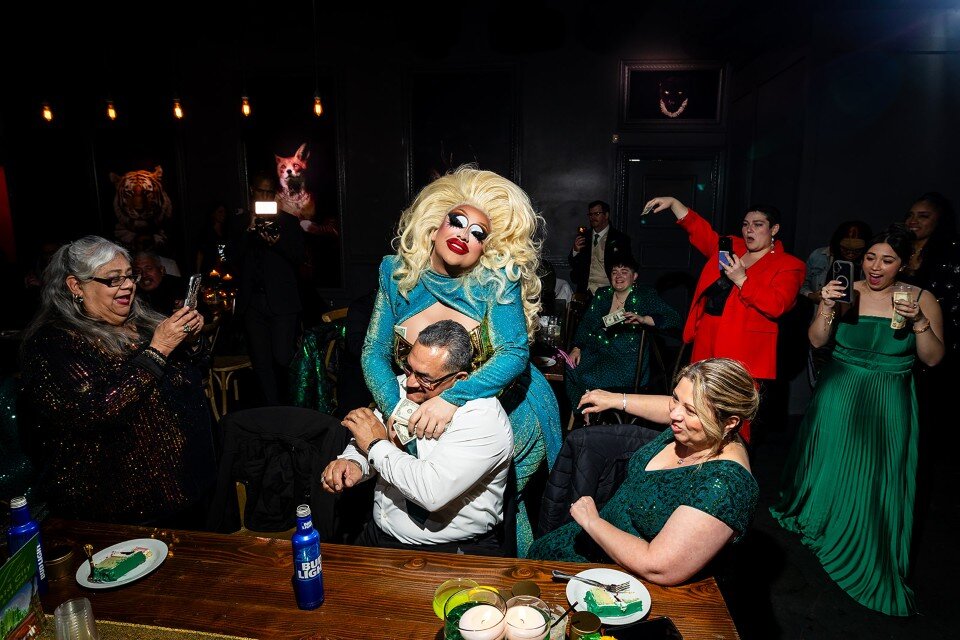
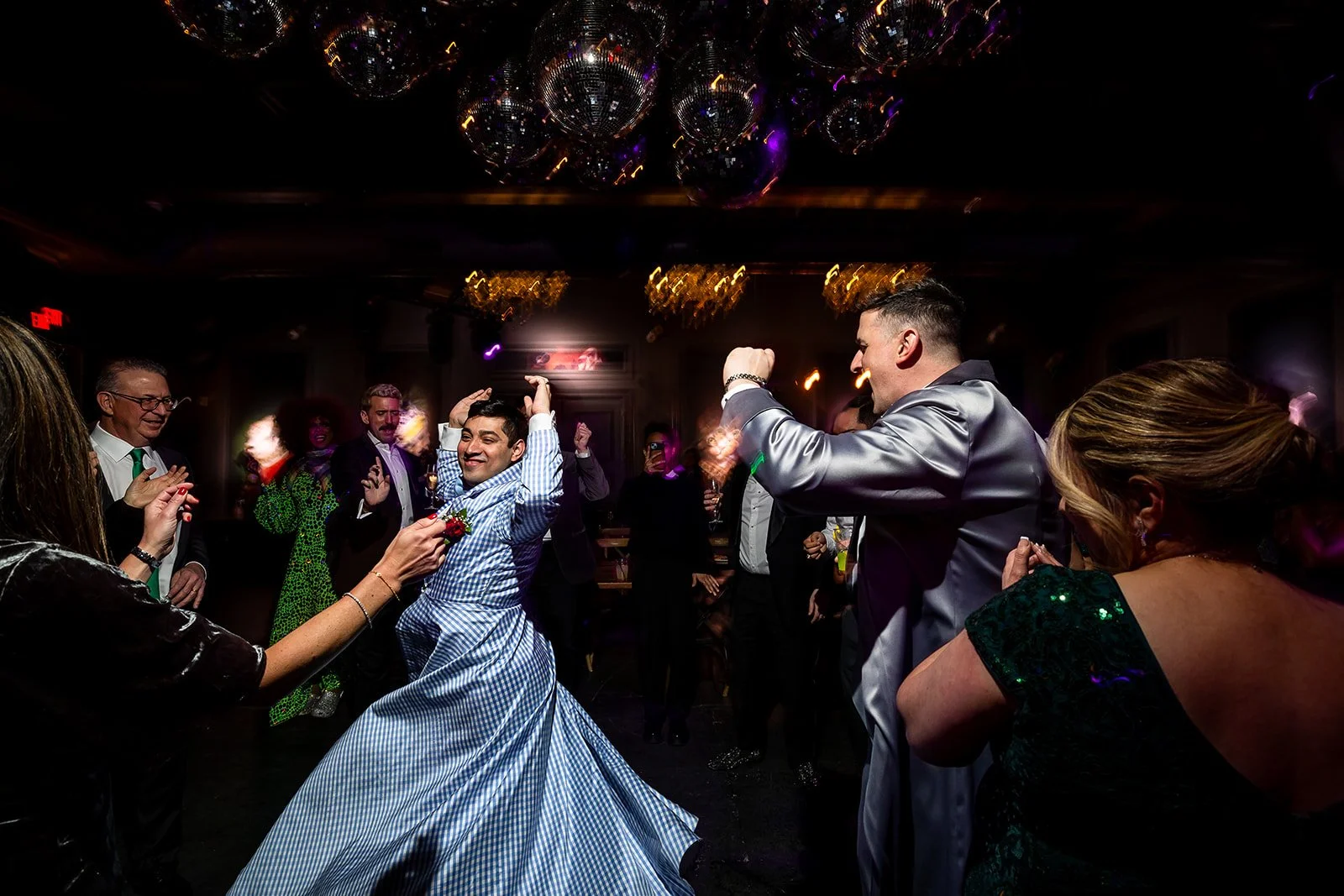
To see a unique LGBTQ+ wedding, check out Mel & Ames’ Wedding blog feature! It was an open mic/cabaret with drag queens, performances, love, and dancing.

Leave a Reply
You must be logged in to post a comment.


I know what it's like to work with professionals who solely accept gay people, versus professionals who are culturally queer, aware of neurodivergence, and use that understanding in how they navigate the world. That's why my client experience is heavily informed by my own queerness and my experience as a trans person. Being able to let your guard down and laugh and connect over shared lived experiences is just a different level, and I wish that for everyone I work with.
- Dr. Crystal Jones
"All are welcome" is different than "This was made with you in mind."

